Exterior Architectural Lighting: Techniques for Stone, Brick, and Modern Facades
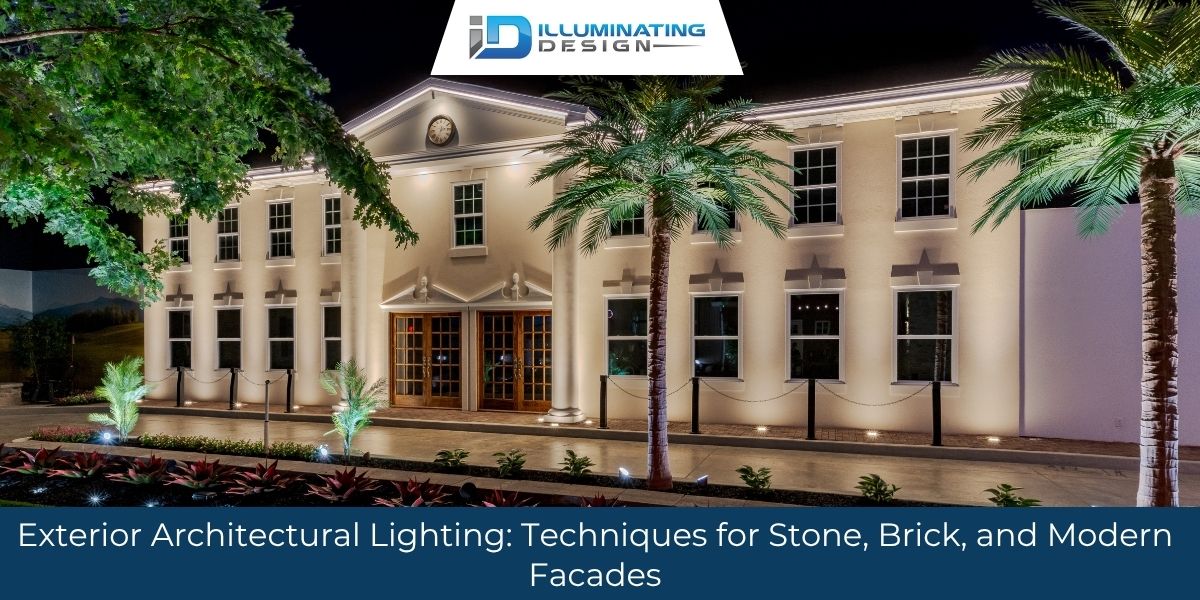
Property managers, HOA leaders, and homeowners rely on exterior architectural lighting to maintain a building’s presence after sunset. Expertly crafted lighting highlights architectural textures and rooflines, ensuring it is your property’s time to shine. As a practical investment, professional illumination enhances curb appeal, elevates safety, and provides a continuous visual identity.
Whether managing a commercial complex or upgrading a residential estate, a tailored exterior lighting program transforms how a building looks and feels at night. Below is a comprehensive guide to understanding exterior architectural lighting, mastering material-specific illumination techniques, and leveraging modern smart controls for maximum durability and efficiency.
Core Elements of Exterior Architectural Lighting
An effective exterior lighting plan combines several core fixture types, each engineered for specific visual and structural roles:
_compressed.webp "user-inserted")
- Path Lights and Bollards: Primary tools for glare-free navigation. Positioned along walkways, driveways, and entry garden paths, they direct light downward to illuminate foot traffic safely.
- Uplighting and Well Lights: Installed at ground level near columns, heavy structural features, or specimen trees, these fixtures direct light upward to emphasize height, vertical lines, and texture.
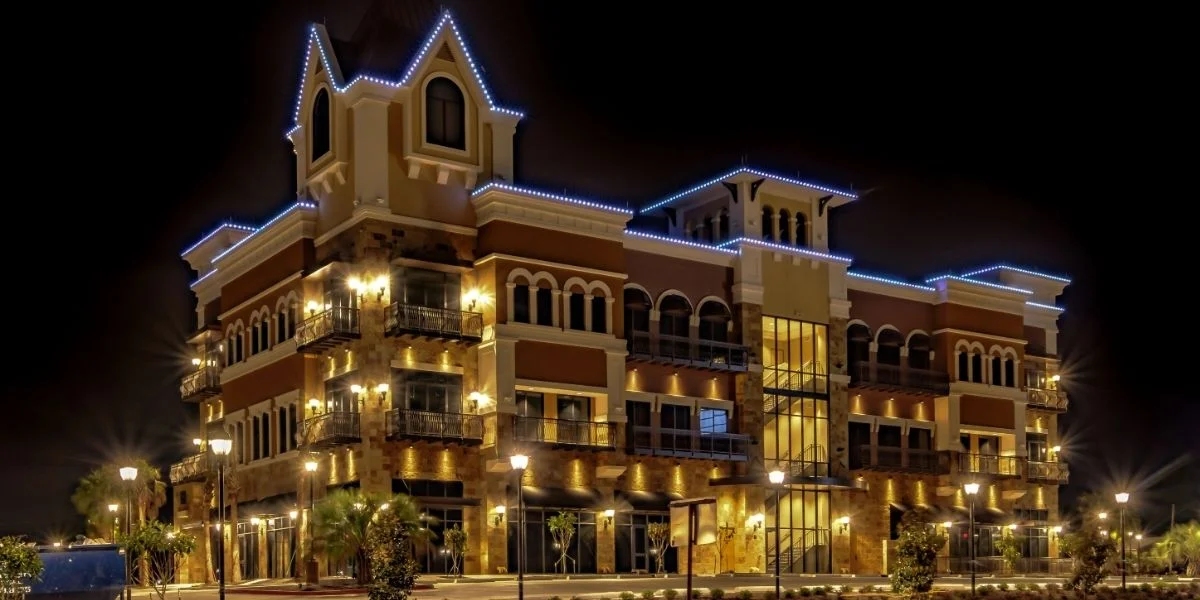
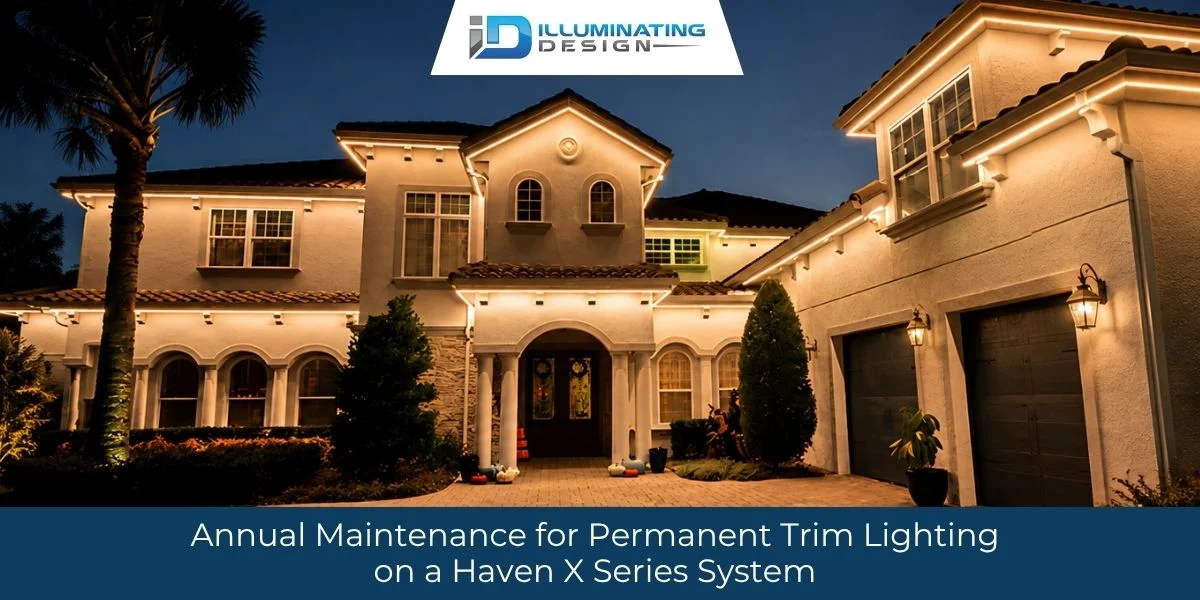
- Permanent Architectural Trim Lighting: Installed discreetly along rooflines or eaves, trim lighting provides a continuous linear accent that defines structural geometry while offering functional downlighting.
- Wall Washers and Accent Spotlights: Used to flood large surfaces with even illumination or highlight focal points like signage, entry archways, and outdoor artwork.
How to Light Different Facades: Stone, Brick, and Modern
Different building materials react to light in different ways. To make a building look its best, you need to match the right lighting style, angle, and light color to the surface material.
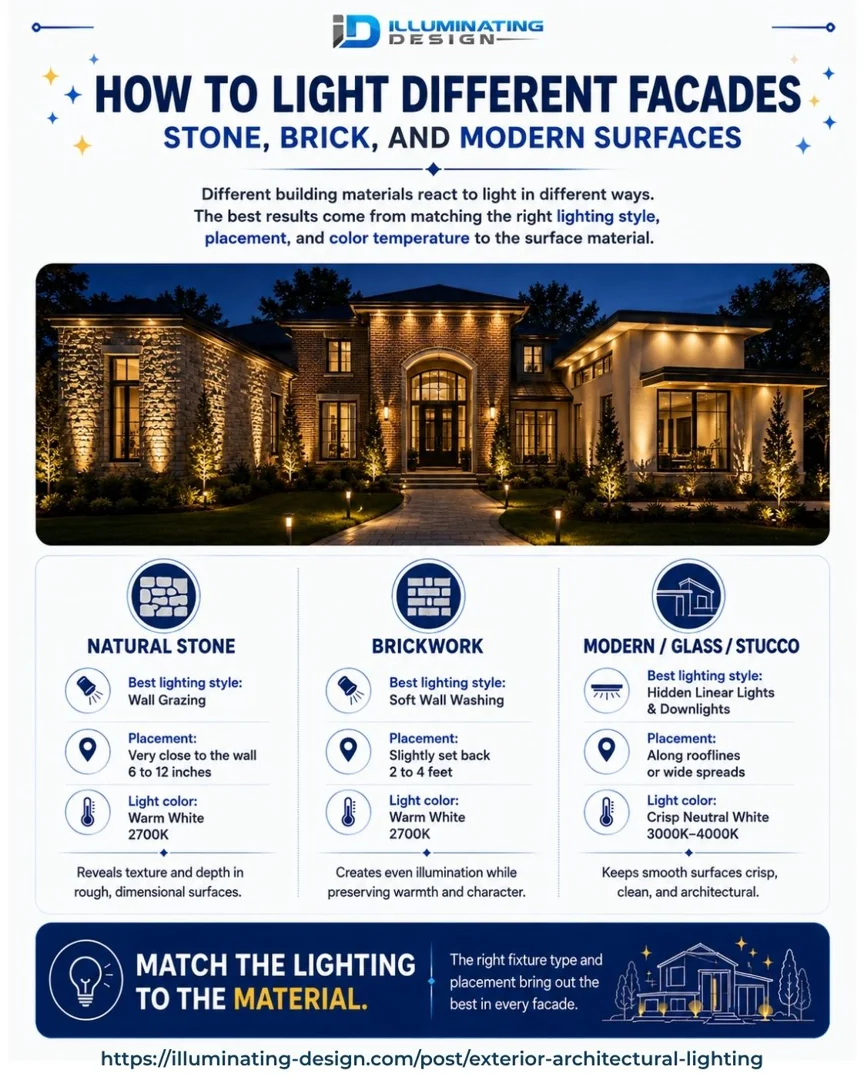
1. Lighting Natural Stone Facades
Natural stone has rough edges, deep textures, and organic colors.
- The Technique: Use wall grazing. Place fixtures on the ground very close to the base of the wall (6 to 12 inches away) and point them straight up.
- The Result: The light skims across the surface, casting small shadows that bring out the natural texture and depth of stone columns or walls.
- Light Color: Use a warm white light (2700K) to bring out natural tan, brown, and gray tones.
2. Lighting Brick Facades
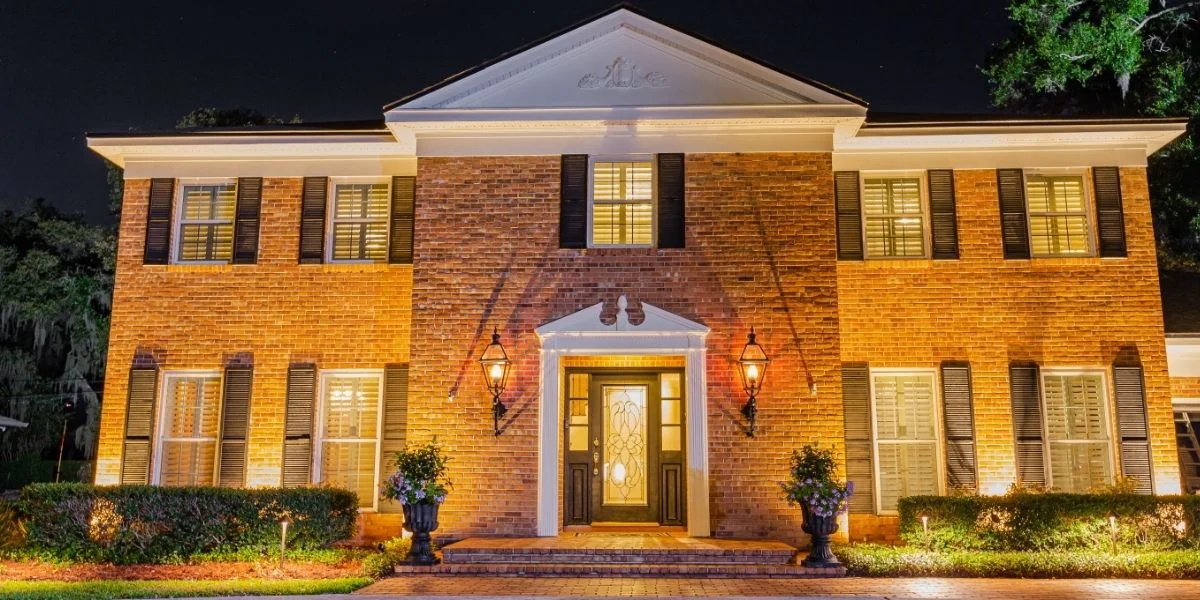
Brick walls have repeating grid patterns and lines of mortar (grout). If you place lights too close, you will get harsh shadows in the mortar cracks.
- The Technique: Use soft wall washing. Place fixtures a bit further back from the wall (2 to 4 feet away) with a wider light beam.
- The Result: Light spreads evenly across the wall, making the brick look warm and smooth without distracting shadow lines.
- Light Color: A warm white light (2700K) makes red and terracotta bricks look rich and inviting.
3. Lighting Modern Facades
Modern buildings feature clean straight lines, smooth stucco, metal panels, and large glass windows.
- The Technique: Use hidden LED strip lights, indirect downlights, and simple roofline accents. Avoid shining bright lights directly onto glass or reflective surfaces.
- The Result: Outlines the building’s clean shape with zero glare or bright, blinding spots.
- Light Color: Modern materials look best under a crisp, neutral white light (3000K to 4000K), which makes white stucco, gray stone, and metal trim look sharp and clean.
Using professional-grade components ensures that your system won't fail after the first major thunderstorm. To understand the differences in quality, read more about Why Professional Lighting Products Outshine DIY Options.
Technical Basics Made Simple
Before picking out fixtures, it helps to understand a few basic technical concepts. Knowing how outdoor lights handle bad weather, how power transformers work, and how to layer different types of light will help you build a system that is safe, efficient, and reliable.
Weather Protection (IP Ratings)
Outdoor lights must withstand heavy rain, heat, cold, and lawn sprinklers.
- IP65: Good for lights under covered porches or roof overhangs.
- IP66 or IP67: Essential for lights sitting directly on the ground or exposed to heavy rain and garden hoses.
Low-Voltage vs. Regular Power
Most professional systems use low-voltage power (12V or 24V). A small box called a transformer steps down your main electrical power to a safer level.
- Safer: Low voltage carries less risk during installation or maintenance.
- Cheaper to run: Uses much less electricity than standard high-voltage lighting.
- Flexible: Makes it easy to add or move fixtures in the future.
The 3 Layers of Outdoor Lighting
Good lighting uses three simple layers so the property doesn't look flat or overly bright:
- Safety Lighting: Practical light for steps, walkways, and entryways.
- General (Ambient) Lighting: A soft background glow across patios and courtyard walls.
- Accent Lighting: Focused beams used to highlight key features like columns, archways, or trees.
Learn more about perfecting this balance in our article on Landscape Lighting.
Smart Controls and Energy Savings
Today’s outdoor lighting systems can be controlled right from your smartphone. You can set automatic timers, dim the lights, or change colors for holidays and special events with a single tap.
Why Switch to Modern LED Lights?
Upgrading from old halogen bulbs to commercial LED lights offers big benefits:
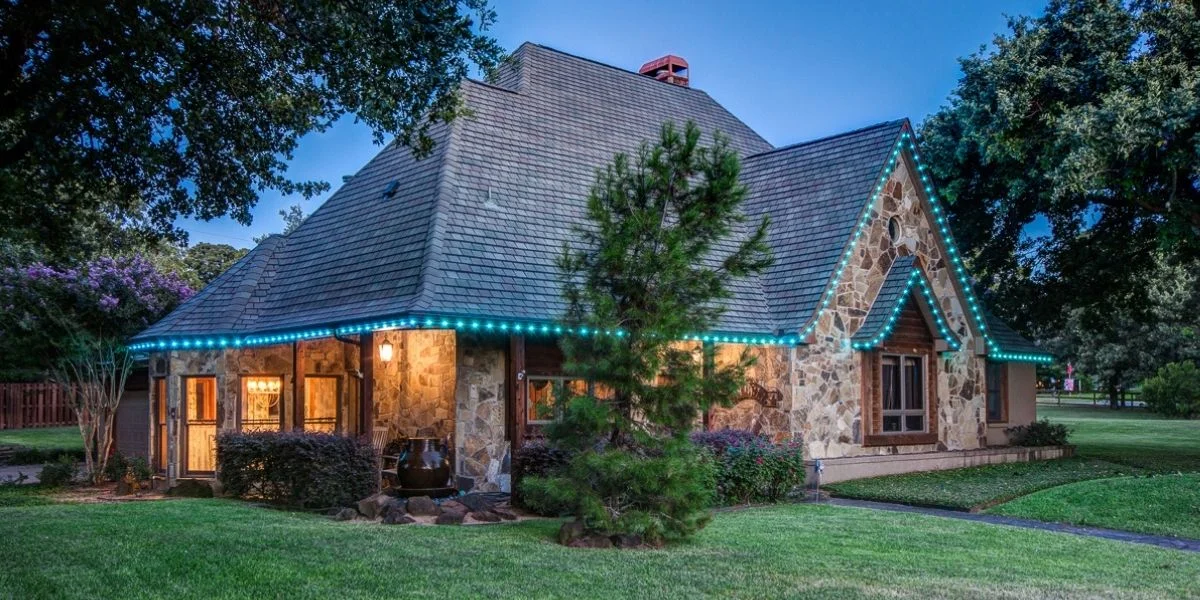
Different building materials react to light in different ways. To make a building look its best, you need to match the right lighting style, angle, and light color to the surface material.
Good Neighbor Rules and Dark-Sky Guidelines
For neighborhood HOAs and commercial properties, outdoor lighting should always be courteous to surrounding neighbors:
- Prevent Light Spill: Aim lights carefully so light doesn't shine directly into neighboring windows or the eyes of oncoming drivers.
- Protect the Night Sky: Point lights downward and use warm light colors (under 3000K) to reduce light pollution and preserve the night sky.
- Eliminate Dark Spots: Balanced lighting removes dark hiding spots around doors and pathways without creating blinding glare.
Ready to Upgrade Your Property’s Look?
A good outdoor lighting system balances smart design, safe electrical work, and real durability against bad weather. Whether you want to highlight natural stonework, bring warmth to a classic brick wall, or accentuate a modern roofline, proper lighting protects your property investment every night.
If you are planning an outdoor lighting project in the metro Atlanta area, the team at Illuminating Design provides custom design plans, commercial-grade LED systems, and full installation services.
Schedule a consultation with Illuminating Design to see how smart outdoor lighting can transform your building.



Bringing Your Vision to Light
Projects Completed
Our team has successfully completed over 3,000 installations, ensuring each project is tailored to meet the client's unique needs.
Years of Experience
With over 20 years in the industry, our expertise and commitment to quality shine through in every project we undertake.
Lights Installed
We have illuminated spaces with over 10,000,000 lights, bringing creativity and innovation to every design.





.avif)





Transform Your Space with Custom Lighting