How Professional Event Lighting Makes Every Photo Look Incredible
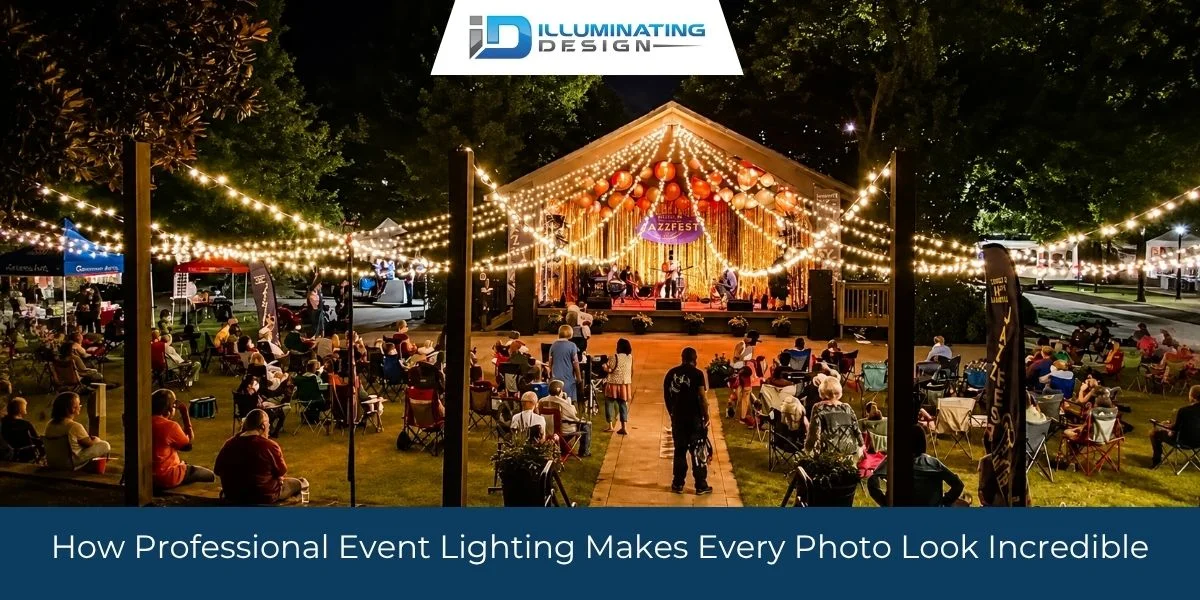
Your event photos are the version of the day that lasts—whether in marketing campaigns or personal memories. Professional event lighting elevates every shot by controlling color accuracy, balance, and shadow depth so cameras capture natural skin tones, deep backgrounds, and crisp focal points.
Built for corporate planners, wedding couples, and venue hosts, this guide covers essential lighting techniques, realistic 2026 pricing, and how to coordinate with your photographer for flawless results.
What Lighting Does for the Way Your Event Looks
Lighting touches every other decision you make. Your florals, linens, cake, stage set, and branded signage all read through whatever light falls on them, which is why event lighting design belongs in the planning conversation early. It also explains why professional lighting products hold their color and output in ways consumer fixtures approach only at close range.
How Lighting Affects Your Photos
Cameras respond to light more sensitively than the human eye does. Guests walk into a dim ballroom and adjust within seconds, while a camera sensor records exactly what reaches it. Three qualities carry the most weight:
- Color accuracy. The U.S. Department of Energy identifies a CRI of 90 or higher as excellent color fidelity. Light at that level renders skin tones, fabrics, and florals close to how they appear in daylight, so your photographer spends less time correcting color.
- Shadow control. Layered light from several angles fills the shadows a single overhead source creates, keeping faces even across the frame.
- Background separation. Uplighting gives walls and drapery their own light level, which lifts subjects off the background and gives images real depth.
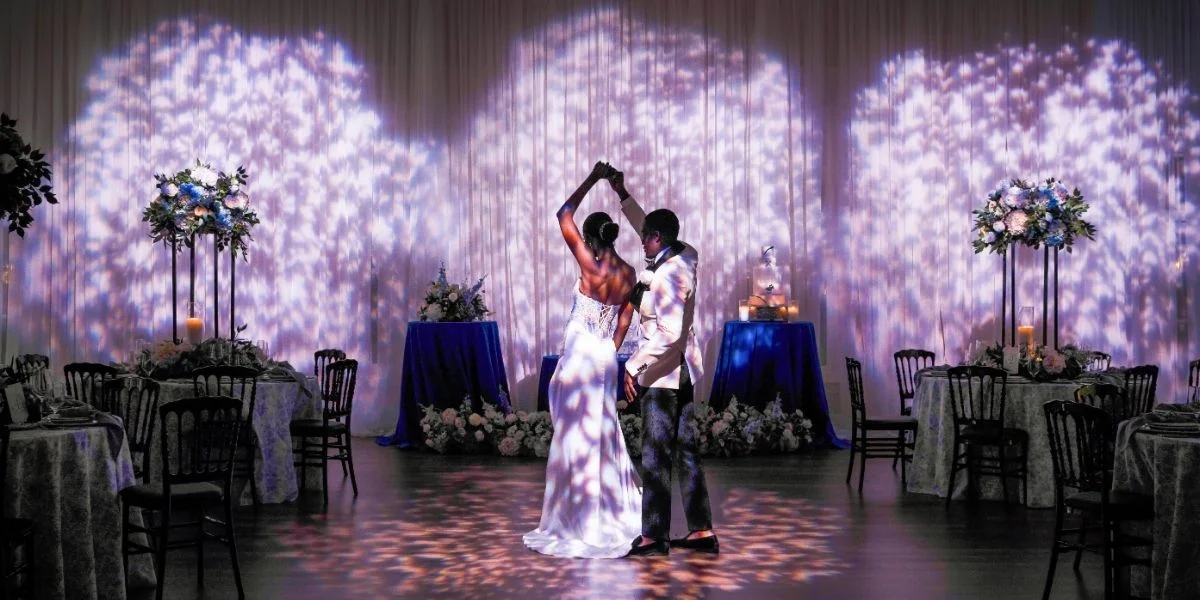
How Color Temperature Shapes the Room
Warm light between 2,700K and 3,200K reads as intimate and relaxed, suiting receptions and evening galas. Cooler light between 4,000K and 5,000K reads as alert and focused, suiting conferences and product demonstrations.
Lighting professionals evaluate color quality with the ANSI/IES TM-30 method, which measures how a fixture renders the full spectrum. Programmed transitions let one room run cool through morning sessions and shift to warm amber for an evening reception.
The Main Types of Professional Event Lighting
Most events combine three or four fixture types, layered so they support each other.
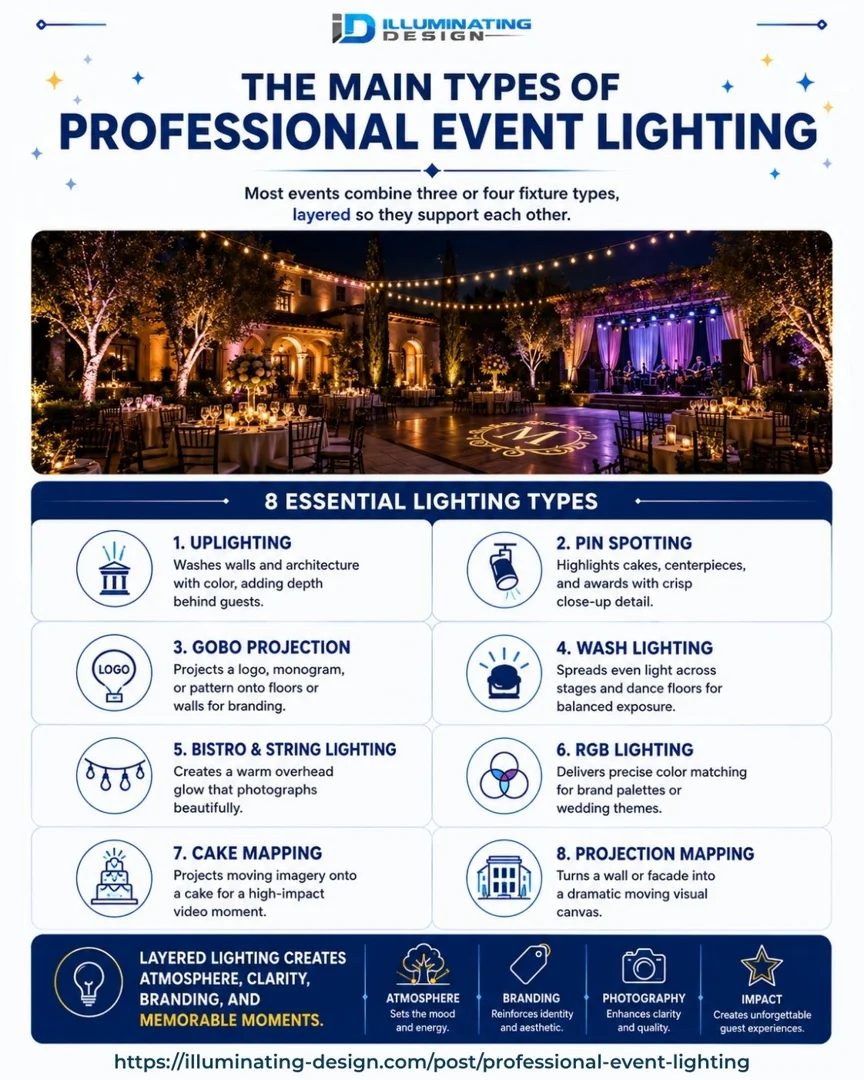
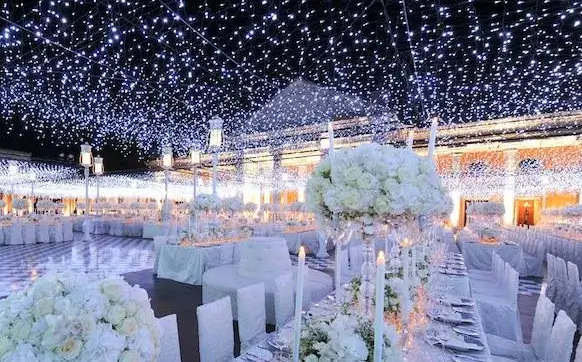
Lighting TypeWhat It DoesHow It Reads on CameraUplightingWashes walls and architectural features with color from floor levelAdds depth to backgrounds, separating guests from the wall behind themPin SpottingDrops a narrow beam onto a cake, centerpiece, or awardKeeps fine detail crisp and correctly exposed in close-upsGobo ProjectionCasts a custom logo, monogram, or pattern onto a floor or wallPlaces your branding directly into guest photos and social postsWash LightingCovers a stage or dance floor with even lightGives faces balanced exposure across a wide frameBistro and String LightingCreates overhead glow across tents, patios, and open ceilingsProduces warm points of light that photograph beautifullyRGB LightingMixes any color across LED fixtures, static or programmedMatches brand palettes or wedding colors preciselyCake MappingProjects moving imagery onto the surface of a cakeCreates a high-impact moment built for video and sharingProjection MappingTurns a wall or facade into a large moving canvasDelivers a dramatic focal point for wide shots and press
Uplighting appears in nearly every package because it does the most visible work for the money, and this guide to placement and fixture choice for uplighting covers how those positions get decided. Illuminating Design offers the full range through its event lighting services.
Choosing Lighting for Your Type of Event
Event TypeRecommended ApproachThe Look It CreatesWeddingsPerimeter uplighting, pin spots on cake and centerpieces, a monogram gobo, string lighting outdoorsWarm and consistent from ceremony through the last danceCorporate ConferencesEven ambient wash, focused stage lighting, color temperature matched to screensClear and reliable for recording and livestreamingGalas and AwardsLayered warm uplighting, pin spots on tables and awards, a defined stage lookElegant, with a sense of occasion that buildsProduct LaunchesBold color accents, moving fixtures, a programmed reveal sequenceHigh energy, built for press and social coverageNetworking ReceptionsSoft ambient glows, bistro lighting, accent light on branded stationsComfortable and conversationalMunicipal and Public EventsBroad architectural washes, pathway lighting, weather-rated fixturesWelcoming across open spaces with clear circulation
Each format has its own guide, including professional wedding lighting ideas, planning a gala event, and ideas for a successful product launch.
What Professional Event Lighting Costs in 2026
The ranges below reflect national averages and give you a realistic starting point. Illuminating Design provides a firm quote after a free consultation and site review.
Six factors move the budget the most: fixture mix, venue size and ceiling height, indoor or outdoor placement, available power, load-in window, and programming complexity. A compact barn may take 10 to 12 uplights around the perimeter, while a large ballroom commonly takes 16 to 30.
Lighting Element2026 National RangeFull professional wedding lighting package$300 to $5,000, most landing at $1,500 to $2,500Complete package for a 100 to 150 guest venue$1,200 to $3,000Uplighting for a large ballroom$600 to $2,000Custom gobo or monogram projection$150 to $300String and bistro lighting, installed$3 to $5 per linear footChandelier installation$150 to $500 per fixture, plus laborCorporate single-room general session$25,000 to $75,000 for full audiovisual scope
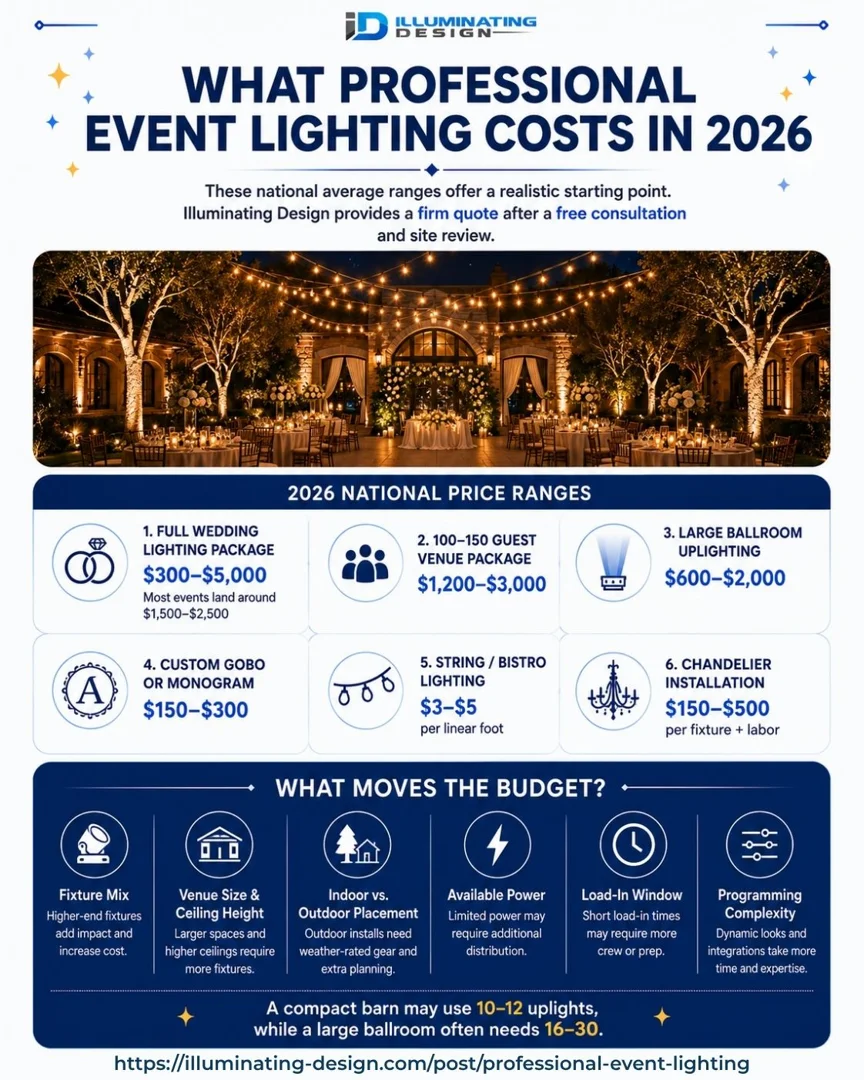
Corporate planners often work from a percentage instead of a line item. A standard conference commonly allocates 15 to 25 percent of the total event budget to audiovisual production, while galas and product launches run 25 to 40 percent because the room carries more of the experience. Wedding couples can cross-check these figures against Zola's national wedding lighting cost data.
A complete quote covers fixtures, delivery, setup and focus ahead of guest arrival, programming, an on-site technician where the program calls for one, and teardown. Ask which of those appear in yours so you can compare proposals accurately.
Questions to Ask Your Lighting Company
A short conversation reveals a lot about how a provider works.
What Custom Options Do You Offer?
Look for a team that researches your event and designs around your venue, your colors, and your program.
What Equipment Do You Use?
Professional fixtures controlled through DMX consoles give you accurate color and consistent output across a long program. DMX is a published industry standard, currently ANSI E1.11-2024, so gear from different manufacturers works together predictably.
What Programming Can You Do?
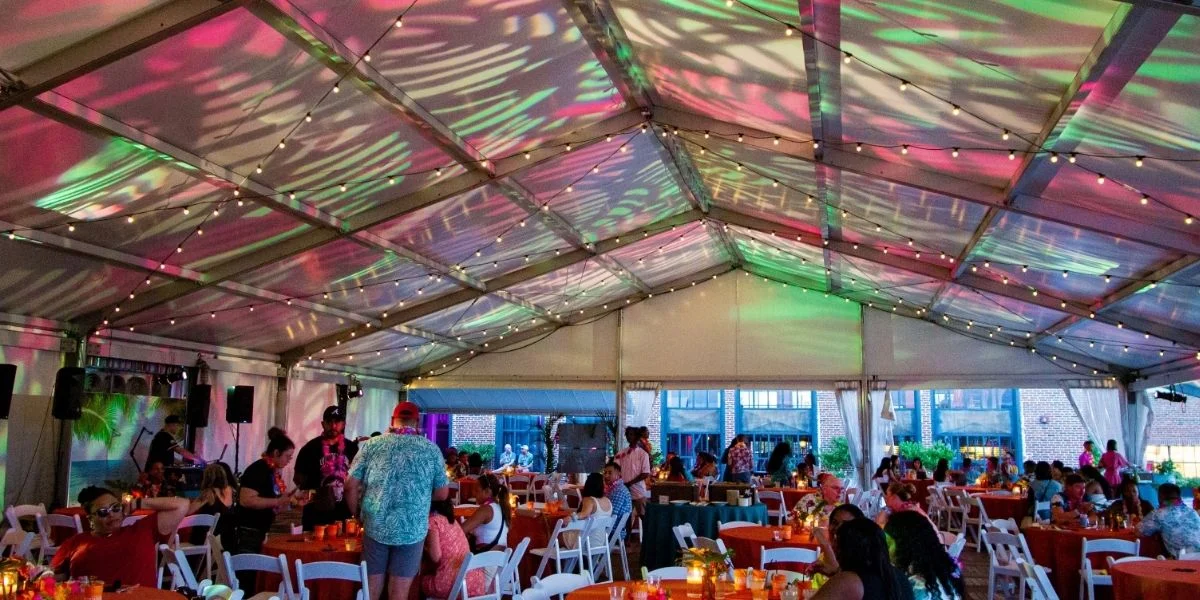
If you want color changes, timed transitions, or cues synced to your run of show, confirm the team programs and operates that live.
What Backup Equipment Travels With Your Crew?
Established companies bring spare fixtures, cable, and control gear to every event as standard practice.
Do You Carry the Insurance My Venue Requires?
Most Atlanta venues ask vendors for a certificate of insurance, and confirming this early keeps your load-in day smooth.
How the Event Lighting Design Process Works
- Book early. Six to twelve months ahead suits weddings and large corporate programs, since peak season dates fill quickly.
- Consultation and walkthrough. Your designer measures the venue, checks power and ceiling height, and reviews your colors and run of show.
- Design and render. Illuminating Design produces a custom render so you can see the plan in your actual space.
- Load-in and focus. The crew places fixtures, runs and protects cable, then focuses and programs the looks ahead of guest arrival.
- Event day and strike. A technician runs cues live where the program calls for one, and the crew returns afterward to restore the venue.
Planning Around Metro Atlanta Venues
Illuminating Design works throughout the metro Atlanta service area, so the team already knows how most regional venues are wired and configured. Four local conditions shape the design:
- Power access. Historic and outdoor sites often have limited circuits. The City of Atlanta requires an electrical sub-permit for events using gas or electric generators, and units rated 5,000 watts or larger may only be permitted by a licensed electrician.
- Rigging rules. Venues set their own policies about what may hang and where, so confirm them during the walkthrough.
- Outdoor conditions. Georgia humidity and afternoon storms call for weather-rated housings and protected cable. Events on public property fall under the city's outdoor event ordinance, and the Mayor's Office of Special Events publishes a guide to which events require a permit.
- Preferred vendor lists. Some venues maintain a list of approved lighting vendors, so ask early.
Ready to See Your Venue in a New Light?
Illuminating Design creates custom lighting for weddings, corporate events, galas, product launches, and public celebrations across metro Atlanta. Every project starts with a consultation, a site review, and a custom render.
Explore the full range of professional event lighting services, or contact the team for a free design consultation and quote.


.jpeg)
Bringing Your Vision to Light
Projects Completed
Our team has successfully completed over 3,000 installations, ensuring each project is tailored to meet the client's unique needs.
Years of Experience
With over 20 years in the industry, our expertise and commitment to quality shine through in every project we undertake.
Lights Installed
We have illuminated spaces with over 10,000,000 lights, bringing creativity and innovation to every design.



.avif)





Transform Your Space with Custom Lighting