Landscape Lighting Cost in Atlanta: What Drives the Price and What's Included at Each Service Tier
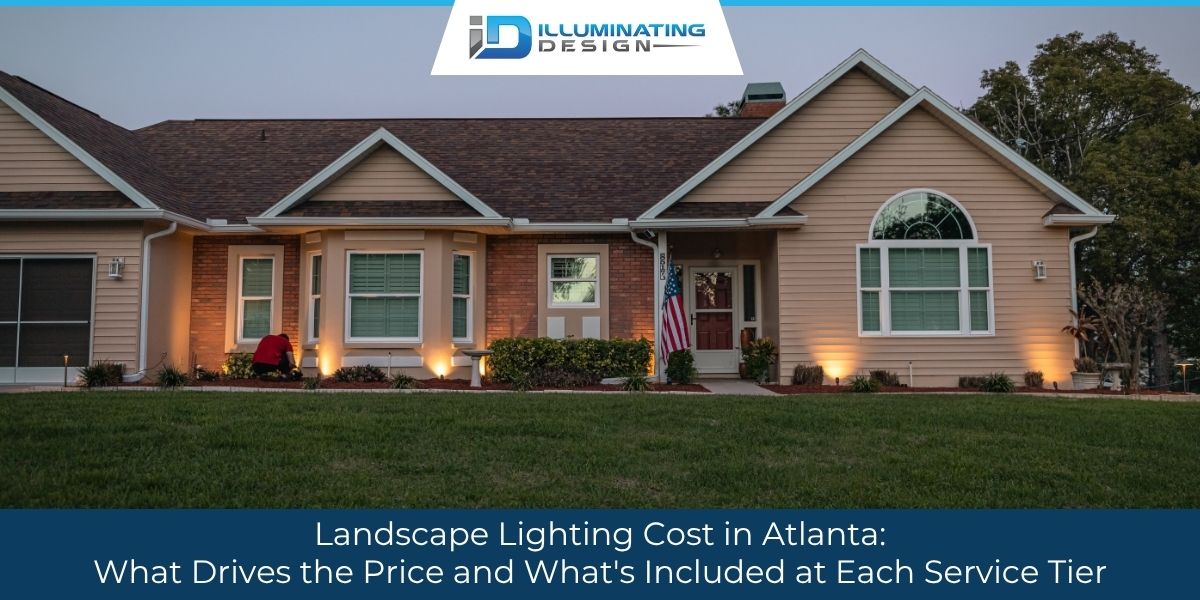
The lowest quote you received is probably the most expensive decision you can make.
That sounds counterintuitive, but homeowners who have gone through one landscape lighting installation already know what this means. The system looked fine at first. Then a fixture failed. Then another. Then the company that installed it stopped returning calls, or worse, closed entirely, and suddenly the parts are discontinued, and the warranty means nothing.
Landscape lighting costs in Atlanta range from a few hundred dollars to well over $10,000, and that spread exists for a reason. What separates those numbers is product quality, system design, and who stands behind the work three, five, and ten years from now.
I'm Bill Frey, President of Illuminating Design Inc., and I've spent over two decades helping homeowners, HOAs, and property managers across Atlanta and the Southeast budget for exactly this, from modest front-yard refreshes to large-scale multi-site installations.
In this article, I'll walk you through what actually drives pricing, what each service tier includes, and why the long-term cost of a budget system almost always exceeds the upfront investment in a quality one.
Why Atlanta Pricing Doesn't Match What You Find Online
Search "landscape lighting cost," and you'll land on national averages somewhere between $2,000 and $6,000. Those numbers aren't wrong, but they're built around a very different project than what most Atlanta homeowners come to me with.
That range typically covers:
- Solar stake lights along a front walkway
- A handful of path fixtures around a modest yard
- A basic DIY setup from a home improvement store
In my experience, those installations make up a small fraction of what Atlanta homeowners actually need. A professionally designed system for an Atlanta residential property, with quality fixtures, a properly sized transformer, and real installation work, starts at $3,000 and goes up from there depending on scope.
architectural accent system
A few things specific to this market push costs higher than national figures suggest.
- Labor rates in metro Atlanta are consistently run higher than national averages due to transportation, permit fees, and labor availability.
- Material costs for commercial-grade, weather-resistant fixtures don't follow the same pricing as what you find on a shelf
- Georgia's humidity and heat demand components built to hold up long-term, and that's reflected in what quality materials cost
- The properties I work with, whether a Buckhead estate or a Smyrna townhome community, typically involve more complexity than a flat suburban lot in the middle of the country
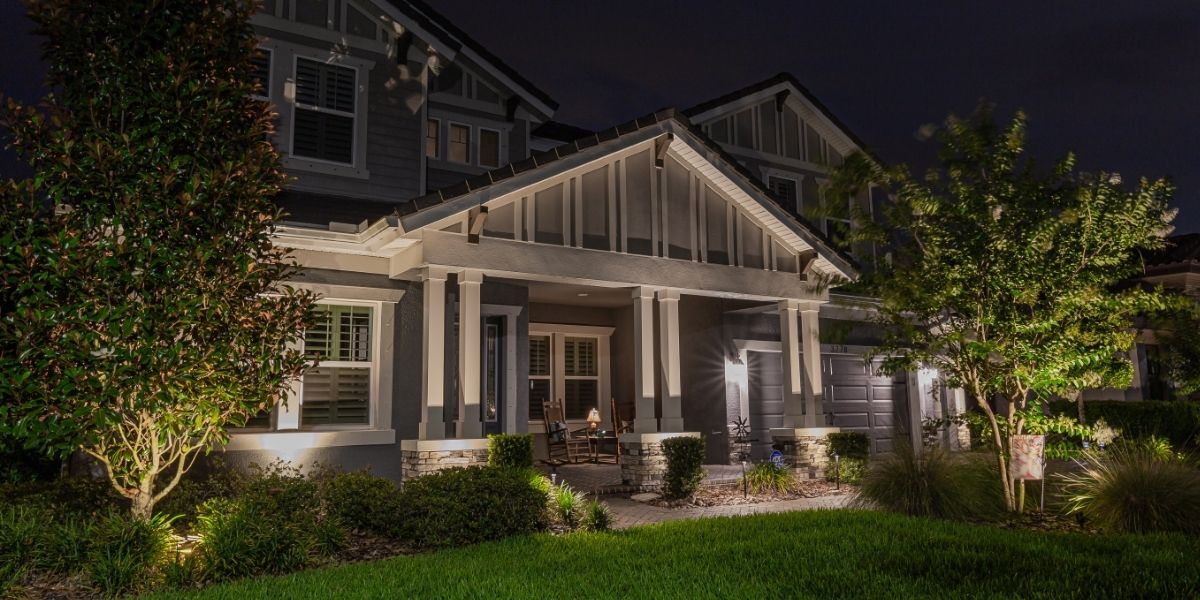
The "per fixture" math you see in online guides also breaks down quickly at the higher end of the market. After two decades of installations, I can tell you that a 15-fixture path lighting job and a 15-fixture architectural accent system involve completely different design hours, transformer capacity, and installation time.
Fixture count is a starting point, and any quote that leads with fixture count alone is missing most of the picture.
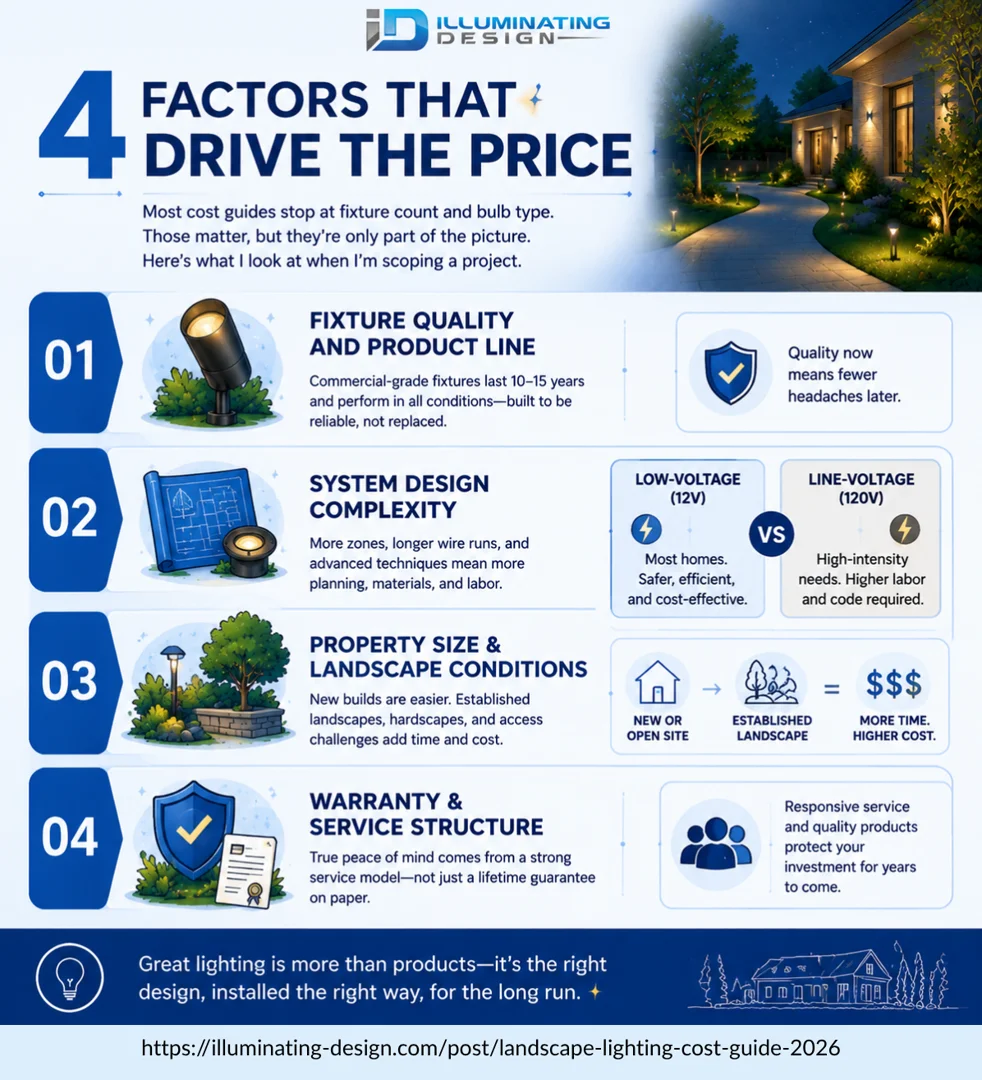
4 Factors That Drive the Price
Most cost guides stop at fixture count and bulb type. Those matter, but they're only part of the picture. Here's what I look at when I'm scoping a project.
Fixture Quality and Product Line
There's a significant difference between what you buy at a hardware store and what goes into a professionally installed system. The fixtures I use are commercial-grade, weather-resistant, and built to perform over a 10 to 15-year lifespan.
We work with Haven Lighting, for example, whose seamless neon-style lights run around $63 per linear foot. That's not a budget product, and it's not priced like one.
The gap between a $50 fixture and a $200 fixture isn't just aesthetic. Cheaper products use lower-grade components that degrade faster in outdoor conditions. A single service call on a failing budget fixture routinely wipes out whatever the homeowner saved upfront, sometimes on the very first visit.
System Design Complexity
A lighting system is more than a collection of fixtures. The number of zones, transformer capacity, wire runs, and techniques involved, whether that's uplighting trees, grazing a stone facade, or laying path lights along a curved driveway, all affect scope and labor. Two projects with identical fixture counts can carry very different price tags depending on how the system is designed.
Part of that comes down to voltage. Here's how the two systems compare:
Low-Voltage (12V)
- The standard for residential landscape lighting in Atlanta
- Safer and compatible with the full range of LED fixtures on the market
- Manageable without a licensed electrician in most states
- The right choice for most homeowners lighting a front entry, walkway, or garden
Line-Voltage (120V)
- Reserved for high-intensity applications like large-scale estate uplighting or commercial properties
- Requires a licensed electrician and must meet National Electrical Code requirements
- Typically runs 30 to 50% higher in labor costs than a comparable low-voltage install
- Warranted for large properties with expansive grounds, powerful wash lighting, or submersible pond fixtures
For most Atlanta homeowners, low-voltage is the right system. For larger or more complex properties, that conversation is worth having during the design phase.
Property Size and Existing Landscape Conditions
New construction or freshly landscaped properties are the easiest and most cost-effective to work with. Wiring goes in before the mulch, and there's nothing to work around. Established properties are a different story.
Over the years, I've seen installations double in labor hours simply because of what was already in the ground. Mature root systems, existing irrigation lines, hardscaping, and finished beds all add time, and that time is reflected in the final price. Accessibility challenges like slopes or dense landscaping add to site preparation costs as well.
Warranty and Service Structure
This one matters more than most homeowners realize. Lifetime guarantees sound attractive, but the way they're structured in this industry often creates problems down the line.
Most are manufacturer-driven, which means the responsibility of honoring them falls on the installer. That creates pressure to keep costs low somewhere in the project, and product quality is usually where it shows.
At Illuminating Design, we offer two options. The Forever Lit program is an extended warranty covering parts and labor for clients who want long-term protection.
For clients who want ongoing upkeep without a full warranty, our annual maintenance plan keeps systems clean, functional, and inspected. Either way, we're still available when something needs attention, with parts that are still supported.
What Each Service Tier Includes
Pricing for landscape lighting breaks down differently depending on the scale and type of project. The following tier shows how I typically frame it for clients who are trying to understand what their budget gets them.
Small Residential Project: Starting at $3,000
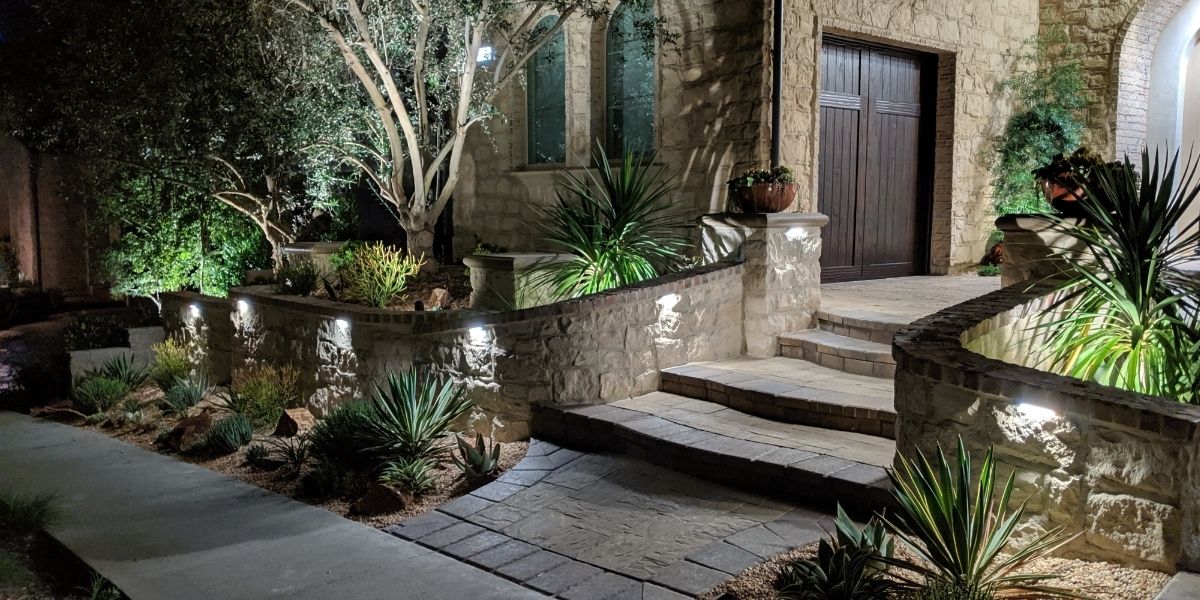
A smaller residential install typically covers a front entry, a defined walkway, or a single focal feature like a specimen tree or garden bed. This scope usually involves 8 to 12 fixtures, a properly sized transformer, and a clean wire run with minimal complexity.
What I tell clients at this tier: a focused, well-designed system with the right fixtures will outperform a sprawling budget install every time. Start small, start right, and expand later if needed.
Mid-Range Residential Project: $3,000 to $5,000+
This is where most Atlanta homeowners land. A mid-range install covers multiple zones across the property, pathway lighting, architectural accents on the home's facade, and tree uplighting. The design requires more planning, a larger transformer, and longer wire runs.
This is the tier where I see the biggest difference between a well-executed system and a rushed one. The result, when done right, is a system that changes how the entire property reads after dark.
Large Residential and Commercial Projects: $7,000 to $10,000+
Large residential estates and commercial properties involve scaled system design, multi-zone controls, commercial-rated fixtures, and in some cases, coordination with property management or facilities teams.
For HOAs, business campuses, and multi-site properties, the lighting is tied directly to how the property presents itself, and the scope reflects that.
One thing worth knowing at this tier: expanding an existing system costs less than starting from scratch, since some infrastructure is already in place. For clients considering phased installations, that's a conversation worth having early.
Trim and Specialty Lighting
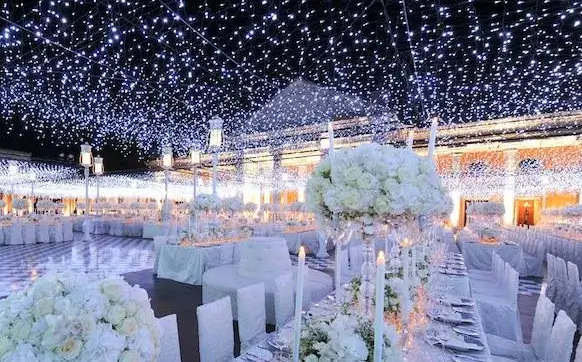
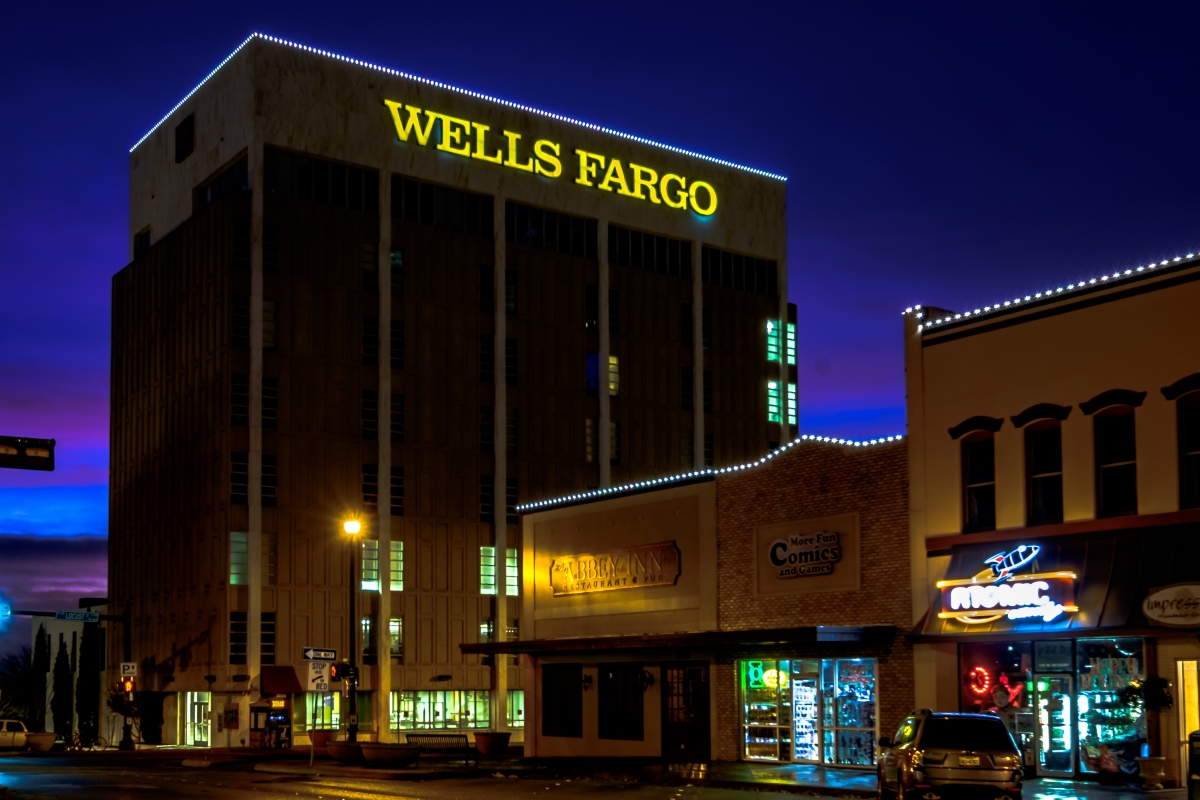
Permanent trim lighting for residential properties runs $4,000 to $8,000+, while commercial trim lighting starts at $10,000 and scales with building size. Holiday lighting follows a similar structure, from $3,000 for a residential installation to $10,000 and up for neighborhood or commercial projects.
These ranges exist because the scope, labor, and product requirements are genuinely different at each level. A number without context doesn't tell you much. What matters is what's included, who's doing the work, and what happens after the installation is complete.
The Real Cost of a Budget System
The upfront price on a low-cost landscape lighting installation looks reasonable until the first service call.

Here's how it plays out in practice. A minor fix that costs a manufacturer next to nothing can run an installer several hundred dollars once you factor in labor, insurance, and transportation. That single visit often exceeds whatever the homeowner saved by going with the cheaper quote. And that's assuming the company is still in business when you call.
The repair costs add up faster than most homeowners expect:
- Damaged fixture: $50 to $200 per repair
- Wiring issue: $100 to $400
- Transformer problem: $150 to $400
- Multiple failures: $300 to $1,000
At that point, replacement often makes more financial sense than continued repairs. A useful benchmark is if repair costs exceed half the price of a new system, replacement is the smarter call.
I've seen homeowners spend a weekend tearing out failed rope lights near a pool because the product wasn't built for that environment. The time, the frustration, and the cost of redoing the work don't show up in the original quote, but they're real expenses. Low-cost products serve a purpose for temporary or decorative use, but they're not long-term investments.
The better comparison is an HVAC system. Nobody buys the cheapest air conditioner available for a home they plan to stay in for fifteen years. A quality landscape lighting system with professional installation and proper components costs more on day one and significantly less over the life of the installation.
According to Investopedia, energy-efficient homes sell for 3% to 5% more, and a well-designed LED lighting system is one of the more accessible ways to get there.
When I scope a project, the question I'm answering is what the system costs to own, besides the installation. That means fixture longevity, transformer sizing that leaves room for future additions, and a service relationship that doesn't disappear after the invoice is paid.
What an Annual Maintenance Plan Covers
A lighting system is only as good as the upkeep behind it. Fixtures get dirty, connections loosen over time, and landscapes change, which means a system that was perfectly calibrated at installation needs attention to stay that way.
Each annual maintenance visit covers the basics that keep a system running the way it was designed to:
- Cleaning fixtures and clearing debris from lenses
- Checking and tightening electrical connections
- Testing transformer output and zone performance
- Adjusting aim on fixtures where landscaping has grown or shifted
The practical value is continuity. The same team that installed the system comes back to service it, already knowing how it's wired, what products were used, and what to look for. That's a different experience than calling a general electrician who's seeing everything for the first time.
For clients who want fuller coverage, the Forever Lit program extends that relationship into a warranty covering both parts and labor. The two options exist because different clients have different priorities, but the goal with both is the same: a system that performs the way it should, maintained by people who know it.
Is There a Way to Make Landscape Lighting More Affordable?
Yes, and the approach matters more than the budget itself. Managing costs well means protecting the components that determine how long the system performs. What I tell every client who's working within a budget:

- Start with a focused scope. Limiting fixtures to the areas that matter most, a front entry, a specimen tree, a defined walkway, keeps the initial investment manageable. A well-designed 10-fixture system outperforms a sprawling 25-fixture budget install every time, and the infrastructure is already in place when you're ready to expand.
- Phase the installation. Spreading the project across two or three seasons is one of the most practical ways to build a quality system on a tighter budget. Planning the full design upfront ensures the transformer is sized correctly from the start.
- Choose LED from the beginning. LED fixtures use up to 80% less electricity than halogen options and run $5 to $15 per month to operate. The energy savings compound over time.
- Bundle with other landscaping work. Scheduling a lighting installation alongside a hardscaping job or a major garden refresh reduces mobilization costs and often opens the door for package pricing.
- Ask about permits before signing. Permit fees typically run $50 to $300 depending on your municipality and project scope. Knowing upfront whether your project requires a permit, trenching, or a transformer upgrade prevents surprises on the final invoice.
Find Out What a Quality System Costs for Your Property
Now that you know what goes into the price, the next step is a conversation about your specific property. Whether you're lighting a front entry or a full residential estate, I'll walk you through what makes sense for your space and put a real number to it.
Schedule a free consultation with Illuminating Design today and find out exactly what your property needs.



Bringing Your Vision to Light
Projects Completed
Our team has successfully completed over 3,000 installations, ensuring each project is tailored to meet the client's unique needs.
Years of Experience
With over 20 years in the industry, our expertise and commitment to quality shine through in every project we undertake.
Lights Installed
We have illuminated spaces with over 10,000,000 lights, bringing creativity and innovation to every design.




.avif)





Transform Your Space with Custom Lighting