

What a Landscape Lighting Designer Does and When You Need One
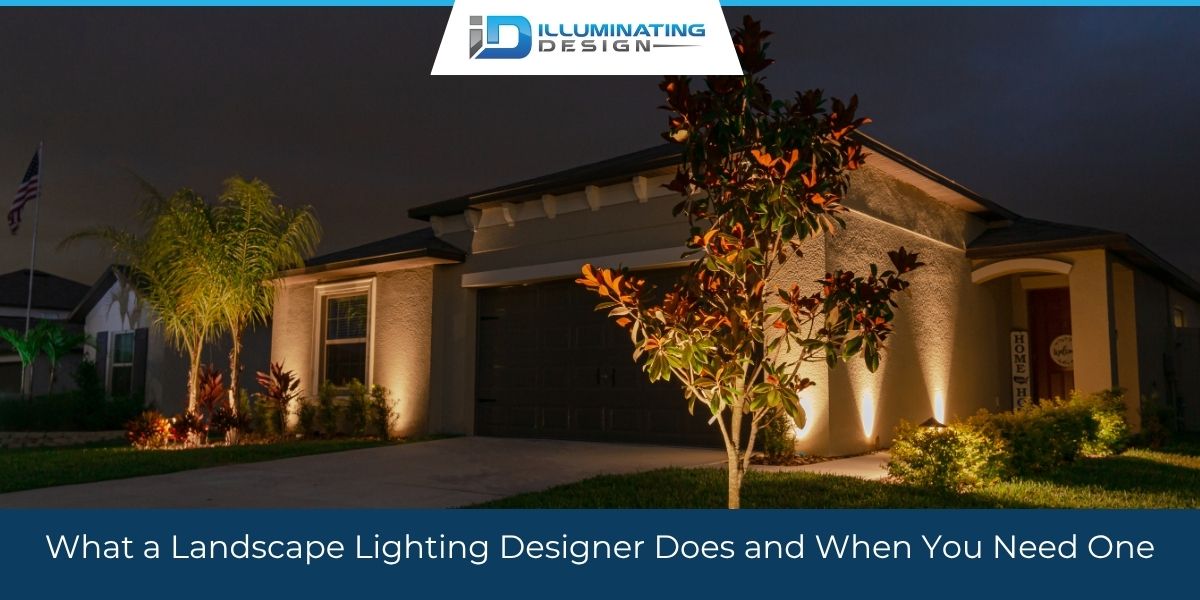
Anyone who has spent enough time in this industry has driven through a neighborhood at night and felt a quiet frustration. Beautiful Atlanta homes with stone facades, mature oak canopies, and professionally landscaped yards lit up like a used car lot. Too bright in the wrong places, completely dark in the right ones, fixtures pointed at nothing in particular.
It happens because outdoor lighting has become easy to purchase and hard to do well. Box stores and online retailers carry enough low-cost options to make any homeowner confident they can figure it out. Some can, but most end up with a yard that looks assembled rather than designed.
The gap is exactly what a landscape lighting designer is trained to close. This blog covers what the job actually involves and the clearest signs that it's time to bring one in.
My name is Bill Frey, President of Illuminating Design Inc. Over two decades of delivering lighting solutions for residential properties, commercial sites, and high-profile clients across Atlanta have taught me one thing. The right design has the power to transform an ordinary outdoor space into something homeowners are genuinely proud of.
What a Landscape Lighting Designer Actually Does
Landscape lighting design is a specialized discipline. It pulls from electrical knowledge, an understanding of how light behaves across different surfaces and materials, and a trained eye for what makes a property worth looking at after dark.
A landscape lighting designer handles all of it, from the initial assessment of the property to the final programming of the control system. Here is what that process looks like in practice.
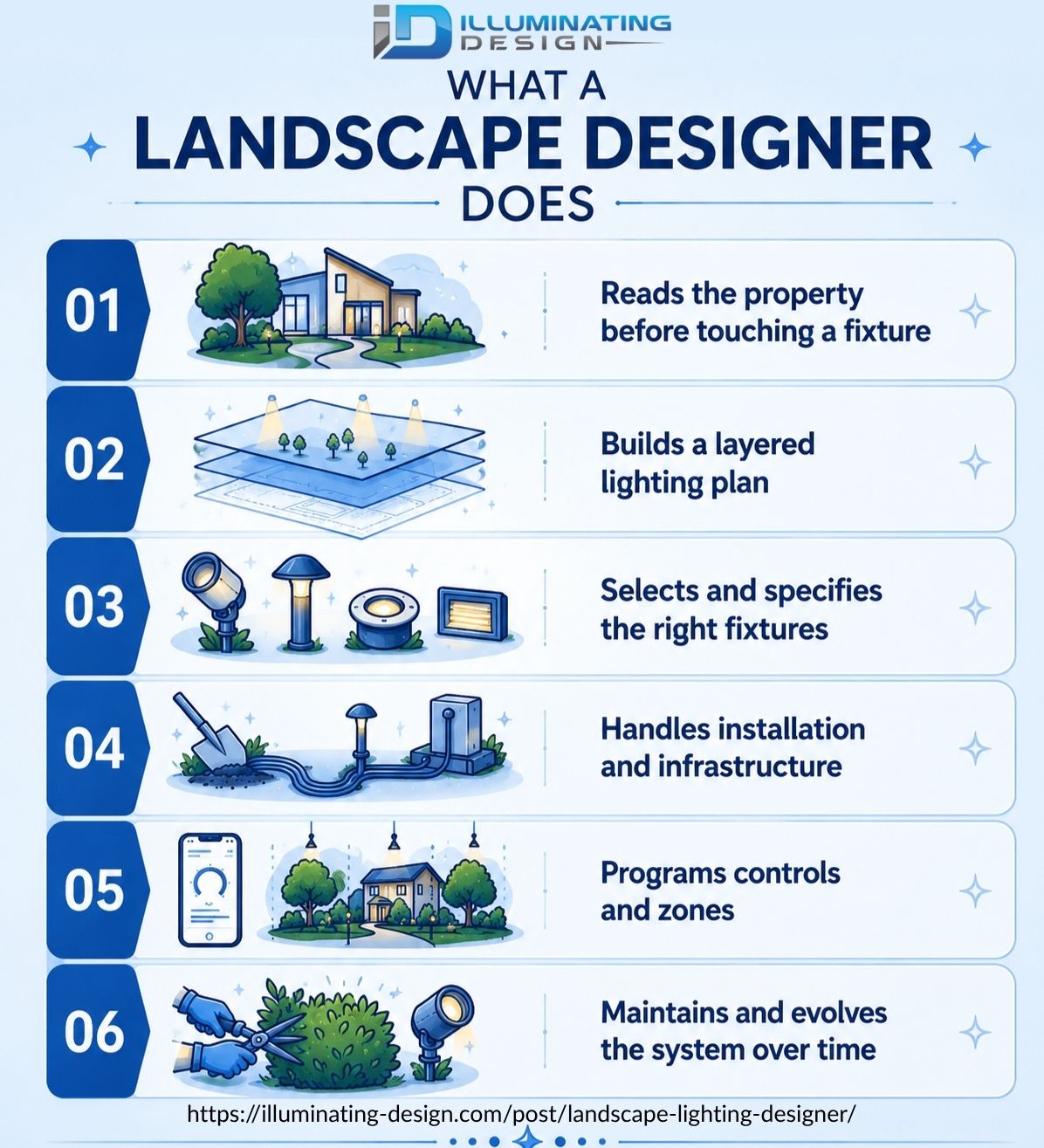
1. Reads the Property Before Touching a Fixture
The first thing a landscape lighting designer does has nothing to do with fixtures. It starts with a walk-through of the property during the day and, ideally, after dark as well. During that assessment, we're looking at:
- The architecture of the home and which features are worth emphasizing
- Sight lines from inside the house, particularly where windows frame the yard
- How mature the plantings are and how they will continue to grow
- Where the hardscape begins and ends
- How the family actually uses the outdoor space in the evening
Most homeowners are surprised by how much that assessment shapes everything that comes after. A tree that looks unremarkable during the day can become the strongest focal point on the property at night with the right fixture and angle. A pathway that feels safe to walk can still feel cold and institutional if the lighting rhythm is off.
That read of the property is what separates a designed system from an installed one.
2. Builds a Layered Lighting Plan
A well-designed lighting system works in layers. No single fixture type or placement strategy carries the whole property. Instead, a landscape lighting designer builds a plan where each layer serves a distinct purpose, and all of them work together.
- Ambient lighting provides the overall glow that makes a space feel inhabited and welcoming after dark
- Task lighting focuses on functional areas like walkways, driveways, steps, and entry points where visibility and safety matter most
- Accent lighting draws attention to specific features worth emphasizing, whether that is a mature tree, a stone wall, a water feature, or an architectural detail on the home itself
Beyond the three layers, the plan also accounts for beam angles, color temperature, fixture spacing, and how shadows fall across different surfaces.
Warm light in the 2700K to 3000K range tends to suit residential properties well because it feels inviting rather than clinical. Cooler temperatures work better for modern architecture or security-focused applications.
The plan determines what the system will look and feel like long before a single fixture goes into the ground.
3. Selects and Specifies the Right Fixtures
Once the plan is in place, a landscape lighting designer specifies the fixtures that will execute it. This is where the difference between professional-grade products and retail options becomes most apparent.
Consumer fixtures available at box stores are built to a price point. They tend to use lower-quality materials, carry limited weather resistance ratings, and degrade faster under consistent outdoor exposure.
Meanwhile, professional-grade fixtures are built for longevity, designed to handle moisture, temperature swings, and UV exposure year after year without corroding or dimming prematurely.
Beyond durability, fixture type determines what the light actually does on the property:
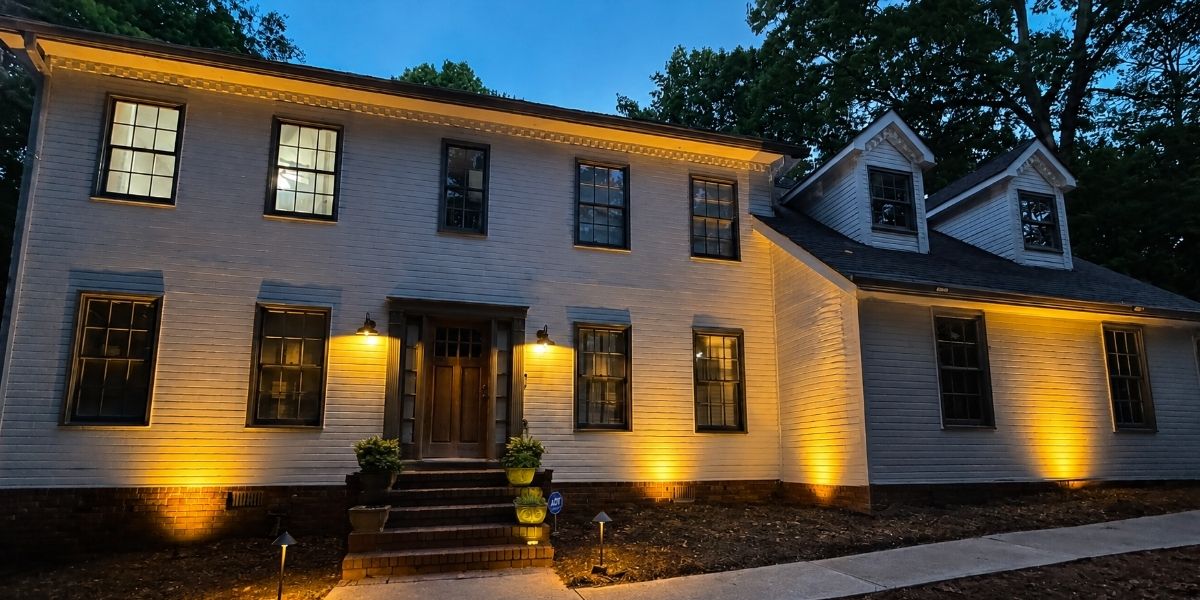
- Uplights direct light upward to emphasize trees, columns, and vertical architectural elements
- Path lights illuminate walking surfaces at a low, controlled height to guide movement without creating glare
- Downlights cast light from an elevated position to mimic natural moonlight filtering through a canopy
- Wall grazers sit close to textured surfaces and rake light across them to bring out depth and dimension in stone, brick, or wood
Choosing the wrong fixture type in the right location produces the same flat, disappointing result as choosing the right fixture in the wrong location. A designer specifies both with intention.
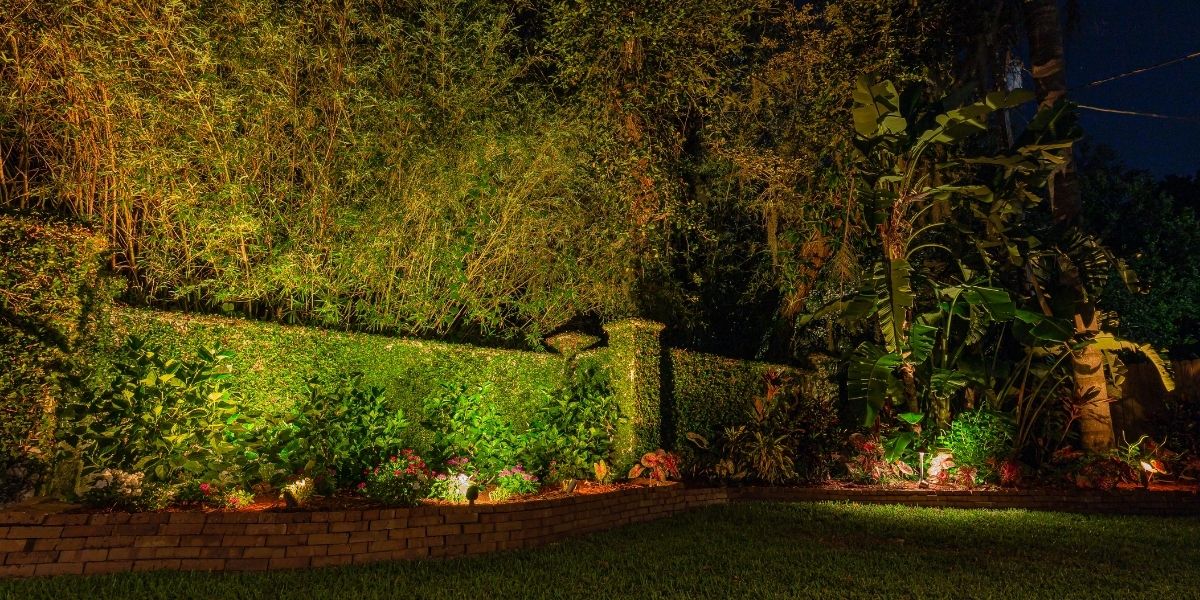
4. Handles Installation and Infrastructure
A lighting plan is only as good as the infrastructure behind it. This is the part of the process most homeowners never see, and the part that determines how well the system performs five or ten years down the line.
A landscape lighting designer oversees:
- Transformer sizing to ensure the system has enough capacity to run every fixture at the correct voltage without overloading
- Wiring runs are planned to minimize resistance and voltage drop across longer distances
- Conduit placement is coordinated with hardscape and planting beds, so the infrastructure disappears into the environment
- Junction points positioned for accessibility without compromising the finished appearance of the property
Properties where lighting is planned from the beginning of a build or renovation benefit the most from this stage.
When conduit runs and junction points are mapped before the pavers go down or the beds are planted, the infrastructure integrates cleanly into the landscape. Retrofitting a system into an existing property is absolutely possible, but the installation requires more creative problem-solving to achieve the same seamless result.
The goal in either case is a system where none of the technical work is visible once the project is complete.
5. Programs Controls and Zones
A professionally designed lighting system does more than turn on at dusk and off at dawn. Smart controls and zoning allow different areas of the property to operate independently and adapt to how the space is being used on any given evening.
A quiet dinner on the patio calls for a different atmosphere than a gathering of twenty people in the backyard. Zones allow a homeowner to dial up the entertaining areas while keeping the rest of the property at a softer level.
Common control features that a landscape lighting specialist configures include:
- Automated schedules that adjust to seasonal changes in sunrise and sunset times
- Dimming scenes preset for different occasions like entertaining, security, or quiet evenings outdoors
- App-based operation that allows adjustments from inside the home or remotely
- Zone management that gives independent control over separate areas of the property
A system without controls is a system with one setting. For homeowners who use their outdoor spaces regularly, that limitation becomes noticeable quickly. Programming the controls is what gives the system the flexibility to match real life.
6. Maintains and Evolves the System Over Time
A landscape lighting system is not a set-it-and-forget-it installation. The property it was designed for continues to change, and the system needs to keep pace with those changes.
Plants grow. A shrub that sat below a fixture at installation may eventually block the beam entirely.
A tree that was uplighted as a young specimen develops a fuller canopy that changes how light moves through it. Hardscape additions, new planting beds, and outdoor structures all shift the priorities of the property and create opportunities to refine the lighting plan.
Beyond plant growth, routine maintenance keeps the system performing the way it was designed to. That includes:
- Cleaning fixtures that accumulate dirt, debris, and oxidation over time
- Adjusting beam angles as plantings mature and focal points shift
- Replacing components before they fail rather than after
- Checking wiring and connections for wear caused by weather, irrigation, or ground movement
- Reassessing transformer load as the system expands or fixtures are upgraded
A designer who installed the system understands its logic from the inside out. That familiarity makes maintenance faster, adjustments more intentional, and upgrades easier to integrate without disrupting what already works.
How a Landscape Lighting Designer Differs From a Landscaper or Handyman
The distinction matters more than most homeowners realize before they hire someone.
LandscaperHandymanLandscape Lighting DesignerPrimary focusPlants, grading, hardscapeGeneral installation and repairsHow light interacts with the propertyLighting approachAdd-on service, secondary priorityInstalls what the homeowner purchasesBuilds a plan specific to the propertyFixture selectionStandard retail optionsBased on homeowner's choiceProfessional-grade, specified for each applicationDesign knowledgeLimited to noneLimited to noneTrained in beam angles, color temperature, layering, and shadowLong-term planningRarely consideredOutside scope of workAccounts for plant growth, system expansion, and evolving useCertificationGeneral trade licensingGeneral trade licensingAOLP certification available for verified specialists
Certification through the Association of Outdoor Lighting Professionals (AOLP) is one of the clearest signals that a lighting professional has pursued specialized training in design principles, fixture selection, and installation standards.
It doesn't guarantee a great result, but it reflects a level of commitment to the discipline that separates dedicated specialists from generalists offering lighting as a side service.
When Do You Need a Landscape Lighting Designer
Some homeowners know from the start that they want a professional involved. Others reach that conclusion after a DIY attempt or a disappointing result from a general contractor. Either way, there are clear situations where bringing in a specialist makes the most sense.
1. You are building or renovating
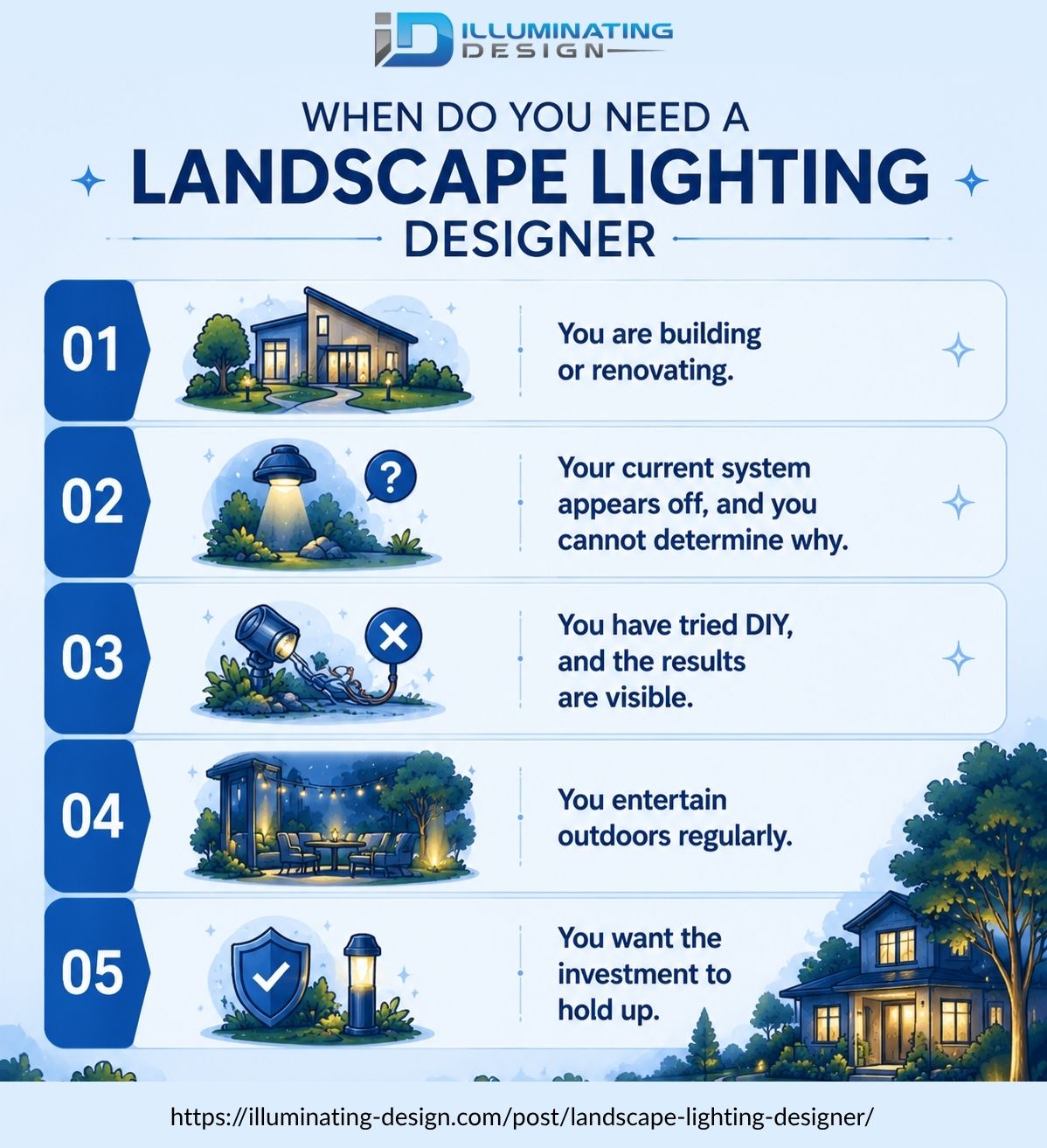
The best time to integrate a lighting system is before the hardscape goes in. When conduit runs, transformer locations, and fixture placements are planned alongside the broader build, the infrastructure disappears into the finished property. Adding lighting after the fact works, but it costs more and requires more compromise.
2. Your current system looks off, and you can't figure out why
Uneven coverage, glare, mismatched color temperatures, and fixtures that plantings have long since outgrown are all signs that the original system was either poorly designed or has not kept pace with the property. A professional assessment identifies what is salvageable and what needs to change.
3. You have tried DIY, and the results show it
Mismatched fixtures, overlighting, flat coverage with no depth or hierarchy, and wiring that was never quite right are all common outcomes of retail lighting assembled without a plan. A designer can work with some of what exists or start fresh, depending on what makes more sense financially.
4. You entertain outdoors regularly
A property used for entertaining needs zones, dimming scenes, and flexible control. A basic on/off system quickly becomes a limitation when the space hosts guests several nights a week throughout an Atlanta summer.
5. You want the investment to hold
Professional fixtures installed with proper infrastructure last significantly longer than retail alternatives assembled without a plan. A well-designed system built on quality components requires less maintenance, adapts more easily as the property evolves, and delivers consistent performance for years.
What to Expect from the Consultation
A lighting consultation with Illuminating Design is a conversation about the property and how it gets used before it is ever a conversation about fixtures.
Bill starts by understanding how the outdoor space functions after dark. Which areas see the most activity in the evening? Where do guests gather? How does the family move through the property at night?
Those answers establish where the design should place its emphasis and where restraint serves the property better than additional light.
From there, the assessment covers:
- What deserves emphasis: Architectural features, mature trees, water features, hardscape details, and entry points that anchor the property visually
- What the view looks like from inside the home: Windows frame the yard the way a canvas frames a painting, and a well-designed system accounts for that perspective
- What is already in place: Existing fixtures, transformer capacity, wiring condition, and whether the current system has anything worth keeping
- What the property will look like in five years: Plantings that are young today will change how light moves through the landscape, and the plan accounts for that growth from the start
- How the space gets used on different evenings: A system designed only for quiet nights at home will fall short the first time it needs to support a backyard gathering
A designer who skips these questions and moves straight to product recommendations is not designing a system. Fixture selection without a property assessment produces the same assembled, disconnected results that homeowners were trying to move away from in the first place.
The consultation is where the design actually begins.
Find Out What Our Designers Can Do for Your Outdoor Space
Your property already has everything worth lighting. We just know how to show it.
Contact Illuminating Design today and let's talk about your project.




Bringing Your Vision to Light
Projects Completed
Our team has successfully completed over 3,000 installations, ensuring each project is tailored to meet the client's unique needs.
Years of Experience
With over 20 years in the industry, our expertise and commitment to quality shine through in every project we undertake.
Lights Installed
We have illuminated spaces with over 10,000,000 lights, bringing creativity and innovation to every design.





.avif)





Transform Your Space with Custom Lighting